

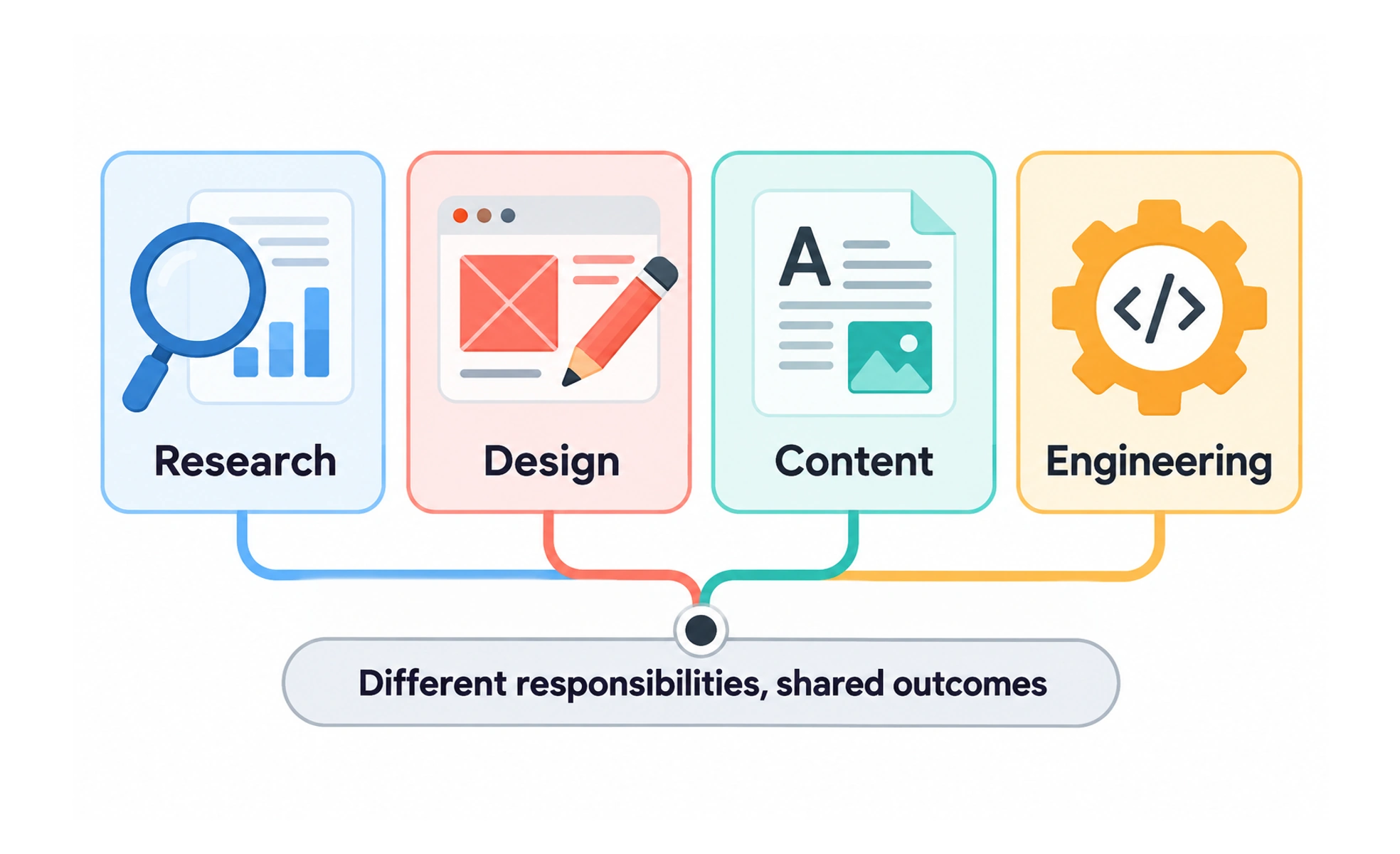
A design team may include product designers, UX researchers, content designers, visual designers, service designers, and design technologists. Role names and boundaries vary widely, so teams should make responsibilities clear in their own context.
A theater production brings together people who handle writing, lighting, costumes, and stage direction. Design work also benefits from distinct expertise, coordinated around a shared experience.
Understand responsibilities, not just titles
A title alone does not explain what a person owns. Teams can describe responsibilities such as research planning, interaction design, content quality, accessibility, or design-system maintenance. This helps collaborators know whom to involve and where decisions sit.
Bring expertise together early
Research, content, visual design, and engineering input can shape a problem before a solution is committed. Involving people only at handoff time limits their ability to catch issues and makes collaboration feel transactional.
Adapt to team size and product needs
Small teams may combine responsibilities, while larger organizations may create specialized roles. Either can work when priorities and ownership are explicit. A person wearing several hats needs realistic capacity, not an assumption that specialization is unnecessary.
Frequently asked questions
Key takeaways
- Define responsibilities instead of assuming titles mean the same thing.
- Involve complementary expertise before major decisions harden.
- Adapt role structure to the team while protecting capacity.
- Share accountability for the complete product experience.