A short history of UX
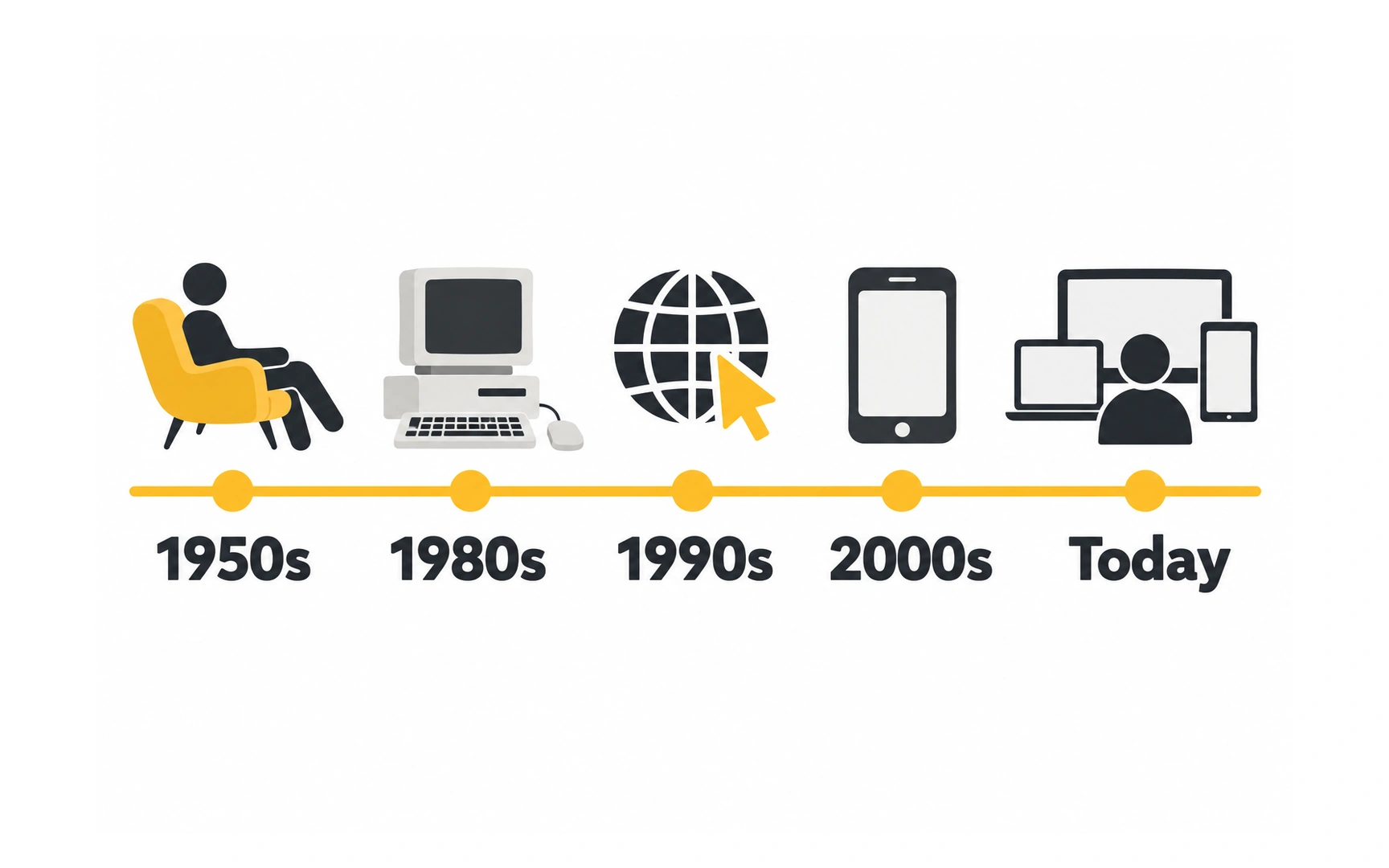
UX grew from a long-standing question: how can tools work better for the people using them? Computers changed the setting, but they did not invent the need for clear actions and useful feedback.
1984: Apple released the Macintosh with a graphical desktop and mouse. It helped bring this way of interacting with computers to a wider audience; it was not the first graphical interface.
1990–1994: Jakob Nielsen and Rolf Molich developed usability heuristics, and Nielsen refined them into the ten principles widely used today. These principles help teams spot common interface problems.
1993: Don Norman joined Apple using the title User Experience Architect. His work helped popularize a broader view of experience, beyond the interface alone.
The dates matter less than the change in perspective: a working feature is not enough. Designers also ask whether people can understand it, use it and trust the result.