

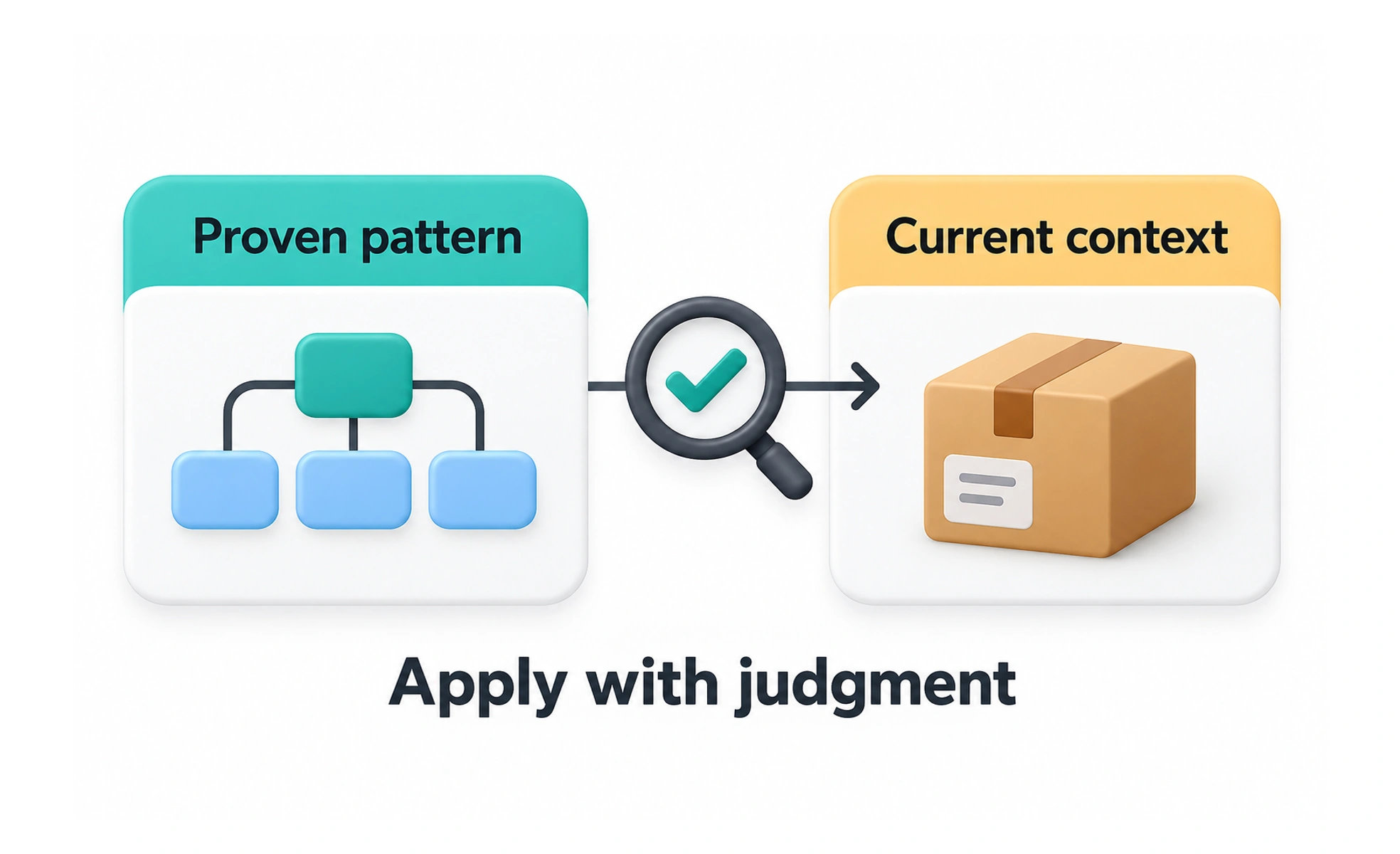
The phrase can help teams share experience, yet it can also make a preference sound like a universal rule. Good practice depends on users, goals, constraints, evidence, and the consequences of getting a decision wrong.
A recipe is a reliable starting point, but a cook still adjusts it for the ingredients, equipment, and people at the table.
Ask what the practice is based on
A recommendation may come from research, a standard, accumulated experience, or a particular team’s convention. These sources carry different weight. Ask what problem the advice solves and in which conditions it was shown to help.
Check the context
A pattern that works for a public website may not suit a medical workflow or an expert tool. Consider user knowledge, device, accessibility needs, risk, and product constraints. The closer your situation is to the original evidence, the more useful the recommendation may be.
Test assumptions with evidence
Use established guidance to avoid known problems, then observe whether it serves your users. A usability session, accessibility review, support analysis, or controlled experiment may reveal that a familiar pattern needs adaptation. Do not treat one successful test as proof for every audience.
Explain exceptions
When a team departs from guidance, record the user need or constraint that justifies the choice. This helps future contributors understand whether the difference is intentional. Revisit the decision when the context changes instead of preserving a rule simply because it has always been there.
Frequently asked questions
Key takeaways
- Treat best practices as informed starting points, not universal laws.
- Understand the evidence and context behind a recommendation.
- Evaluate patterns with the users and risks of your product.
- Document deliberate exceptions and revisit them when conditions change.